
ETF Outflows, Macro Pressure, Sector Breakdown
Key Numbers:
Bitcoin $58,331.33 (-20.72%) Ethereum $1,565 (-21.97%)
1-month return
Total Crypto Market Cap $2.13T (-16.70%)
2026 returns
Bitcoin –33.34% Ethereum –47.29% Gold -6.54%
NASDAQ 12.43% S&P500 9.38%
This Month’s Highlights
- Bitcoin ended June at $58,331 in the 2026-07-01 00:00 SGT snapshot, down 20.72% for the month and more than 33% for 2026 year to date.
- Ethereum ended June at $1,564 in the same SGT snapshot, down 21.97% for the month and more than 47% for the year.
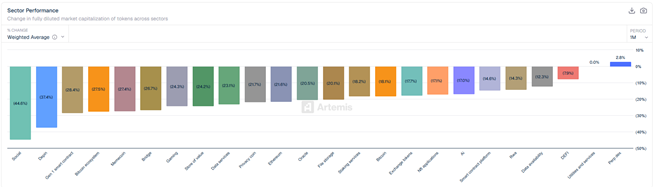
- Artemis’ one-month sector view showed a broad token drawdown, with Social down 44.6%, DePIN down 37.4%, and only Perp DEX positive at +2.8%.
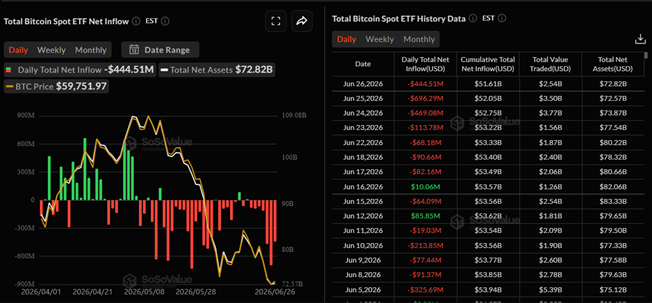
- US spot Bitcoin ETFs suffered their worst month yet, with roughly $4.51 billion of June net outflows in SoSoValue data.
- Citi argued on June 3 that the dearth of fresh investors mattered more than Strategy’s 32 BTC sale. June validated that view.
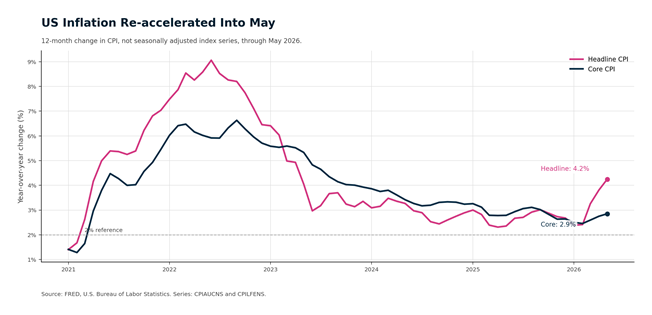
- The macro tape stayed hostile. The June 5 employment report showed payrolls up 172,000 and unemployment at 4.3%, the June 10 CPI release showed 4.2% headline inflation and 2.9% core, the Fed held rates at 3.50% to 3.75% on June 17, and the June 27 PCE release showed 4.1% headline and 3.4% core.
- Strategy kept buying Bitcoin, but its STRC preferred stock sank well below par, shifting the market’s attention from accumulation alone to the cost of financing it.
- Ethereum had a split month. The Ethereum Foundation cut its budget by 40%, while CryptoSlate reported record usage despite the token’s drawdown.
- The strongest adoption story sat outside native tokens. Coinbase moved deeper into stock and pre-IPO products, Chainlink linked 47 banks for cross-border settlement testing, and tokenized-stock activity kept climbing.
State of the Market
June was the month the sponsor bid left. Bitcoin did not lose the $60,000 area because one headline spooked the market. Ethereum did not slide toward the cycle lows because the chain stopped being used. The month broke lower because capital kept leaving the most visible crypto wrappers, macro data stayed too hot for easy policy relief, and the cleaner risk trade lived somewhere else.
That distinction matters. A market can fall because the thesis failed. It can also fall because funding got tighter and buyers stepped aside. June looked like the second case. US spot Bitcoin ETFs had their worst month yet, official macro releases kept the Fed boxed in, and the opportunity cost of owning native crypto beta stayed high while AI-linked equities and tokenized versions of familiar assets kept attracting attention.
The operating layer held up better than price. Bitcoin transactions climbed above 820,000 per day, stablecoin balances slipped only modestly in the data cached for this report, and tokenized-stock activity moved above $4.3 billion in monthly volume. Native tokens lost sponsorship. The rails did not stop improving.
Performance Table
| Asset | Snapshot/Close Used | June 2026 Return | 2026 YTD Return |
| Bitcoin | $58,331.33 | -20.72% | -33.34% |
| Ethereum | $1,564.05 | -21.97% | -47.29% |
| Total Crypto Market Cap | ~$2.13T | -16.70% | -33.41% |
| Gold | $4,042.80 | -11.35% | -6.54% |
| NASDAQ | 26,132.12 | -3.12% | 12.43% |
| S&P 500 | 7,487.43 | -1.22% | 9.38% |
Source: CoinGecko month-end snapshot at 2026-07-01 00:00 SGT for BTC and ETH; Yahoo Finance intraday prints at 2026-06-30 16:00 UTC for traditional assets; CoinGecko global snapshot for total crypto market cap
Bitcoin Market Analysis
Bitcoin spent June trying to defend one level. It failed. BTC opened the month around $71,320, printed a June low near $59,532 on the daily Yahoo series, and ended the month at $58,331 in the 2026-07-01 00:00 SGT CoinGecko snapshot. That path matters more than the closing number alone. Every bounce from the low-$60,000s was weaker than the one before it, and every failure made the next defense look more tactical than structural.
Source: altFINS
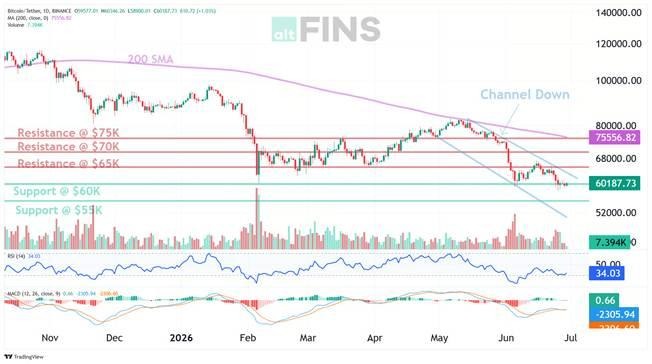
The chart now has a narrow map. $60,000 remains the immediate pivot because it acted as support, broke, and then started behaving like a failed floor. The next tactical danger zone sits near $57,000, close to the liquidation pocket highlighted in late-June reporting. If that fails cleanly, the low-$50,000s become the next serious discussion. Resistance begins at $65,000, then $70,000. Bitcoin does not need a dramatic rally to improve the tone. It needs a level reclaimed and held.
June’s biggest signal was not technical. It was the flow tape. SoSoValue API data showed about $4.51 billion of June net outflows. CoinDesk’s June 1 coverage had already framed the month as a record redemption run colliding with an AI-led equity bid. That is the right starting point. June’s problem was not access. It was that access made selling easier, too.
Source: SoSoValue
Citi’s June 3 note gives the best frame for what happened. Strategy’s small BTC sale was loud because it cracked a narrative. It was not large enough to explain the move on its own. The deeper issue was the absence of new demand. That matters because it rules out the lazy explanation that June was only about one company, one transfer, or one IPO.
The treasury bid remained alive, but it stopped looking simple. Strategy kept buying, yet its STRC preferred stock traded far below par, and CryptoQuant publicly argued for a pause in purchases. That was a genuine shift in June. Investors stopped treating every treasury purchase as automatic support and started asking how expensive that support had become.
The more constructive signal came from the chain itself. Bitcoin transactions climbed above 820,000 per day, and older holders slowed distribution. That does not erase the price damage. It does show that June was a funding withdrawal month, not a usage collapse.
Ethereum Market Analysis
Ethereum’s month was harder than Bitcoin’s and messier for different reasons. ETH began June near $2,003, fell to roughly $1,565 during the selloff, and ended the month at $1,564 in the 2026-07-01 00:00 SGT CoinGecko snapshot. That left the asset down 21.97% for the month and more than 47% for the year. Bitcoin spent June losing a big round-number floor. Ethereum spent it trying not to fall back into fresh cycle lows.
Source: altFINS
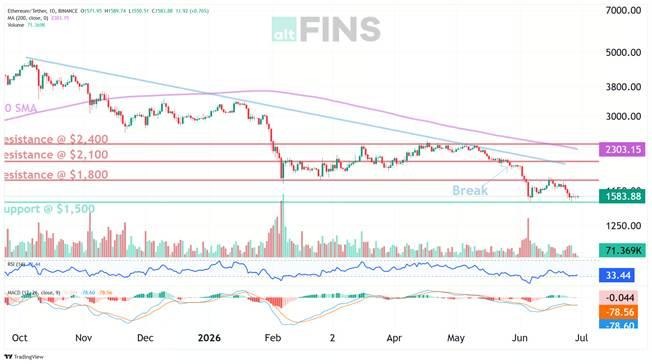
The first level that matters is $1,500. ETH never put much distance between spot and that zone once the late-month pressure arrived. The failed reclaim of $1,800 left the market with little room for error, and $2,100 stayed far enough above spot to make any rebound feel incomplete. Ethereum does not need a full trend reversal to improve the mood. It needs to stop trading like every bounce is borrowed time.
ETF support was weaker here than it was in Bitcoin. Spot ETH products did not offer a strong counterweight during June’s drawdown, and the cumulative institutional story stayed thinner than BTC’s. That difference matters. Ethereum needs fewer net sellers when the chart is already this weak. It did not get them.
The better ETH case came from usage and institutional behavior, not price. CryptoSlate reported record activity on Ethereum even as the token remained deeply negative for the year. BitMine kept adding ETH into weakness. Those are not trivial signals. They say the asset still matters to operators and allocators who want exposure to financial rails rather than only price beta.
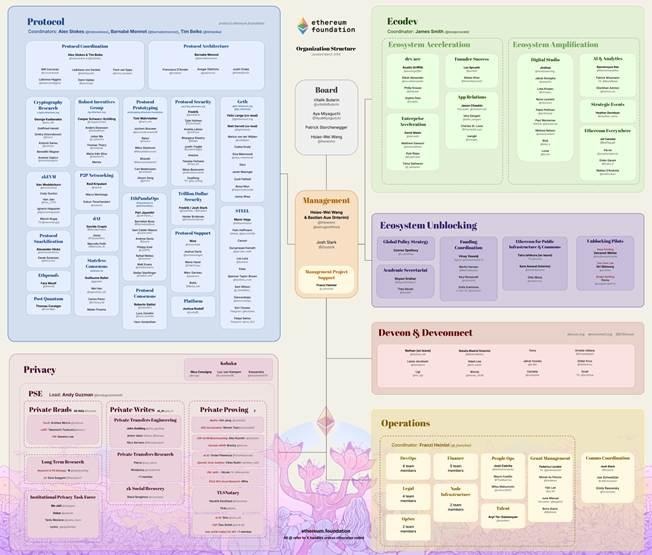
The market still charged Ethereum a larger confidence discount than Bitcoin. The Ethereum Foundation’s June 23 reset cut budget by 40% and reduced staff. Ethlabs then formed with former senior researchers to address a funding gap outside the Foundation. That does not prove Ethereum’s roadmap is broken. It does make funding, governance, and coordination part of the price discussion in a way they were not before.
The result was a cleaner split than Bitcoin’s. Bitcoin’s problem was sponsor capital leaving the wrapper. Ethereum had that problem too, then layered a visible internal reset on top of it. That is why ETH underperformed even as usage and institutional interest stayed alive.
What Actually Broke In June
June’s easiest story is that AI stole the bid from crypto. That is true, but it is not enough. AI-linked equities and large public-market narratives did keep pulling risk capital toward cleaner earnings stories. South Korea’s KOSPI plunge during a leveraged chip unwind showed how much speculative capital was still running through technology exposure outside crypto. That was the backdrop.
The mechanics inside crypto were uglier and more important. ETF redemptions became a live scoreboard for institutional demand, and that scoreboard deteriorated all month. CoinDesk’s June 1 report and CryptoSlate’s June 24 read show the same pattern from different points in the month: redemptions kept coming while the market tried to talk itself into a floor.
Macro made that harder. The June 5 jobs report showed 172,000 payroll gains and 4.3% unemployment. The June 10 CPI release showed 4.2% headline inflation and 2.9% core. The June 17 FOMC statement left the target range at 3.50% to 3.75%. The June 27 PCE release showed 4.1% headline and 3.4% core. That is not a setup that invites a relaxed chase back into the highest-beta part of the market.
The month did not look like a broad rejection of crypto’s long-run use case. It looked like a repricing of who the dependable buyer really is when liquidity gets tighter. ETF holders sold. Treasury buyers became more expensive. Miners faced weaker economics. Users kept using the chains anyway. That was June’s real split.
Financial Rails Won The Month
The strongest structural story in June was not native token performance. It was the steady migration of financial activity onto crypto-connected rails that look more familiar to institutions and retail investors. That is a different business from asking the market to buy open-ended token beta.
Source: CryptoSlate
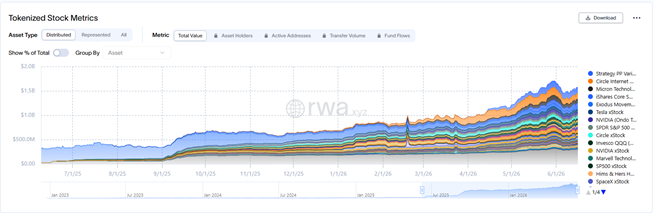
Coinbase moved deeper into AI-assisted finance, stock options, and pre-IPO access. Chainlink linked 47 banks for cross-border settlement testing. CryptoSlate’s late-June tokenized-stock coverage put monthly activity above $4.3 billion. Those are not fringe stories. They are evidence that the crypto rails story is broadening even while BTC and ETH are under pressure.
This matters because it changes what June should be remembered for. The market did not stop believing that blockchain-based settlement, tokenized distribution, or programmable assets are useful. It started rewarding versions of those ideas that look closer to mainstream finance. Native tokens lost ground. Rails selling stocks, bank settlement, and on-chain finance kept gaining relevance.
That is not automatically bullish for BTC or ETH in the short run. It is a real signal about where adoption is moving. June suggests that the next growth leg may arrive first through financial products people already understand, then spill back into the token layer later.
Ethereum’s Research Reset Priced In A Governance Discount
Ethereum’s June reset deserves its own section because it was not only a staffing story. It changed the way the market thinks about who funds and coordinates core protocol work when the token is weak.
Source: Ethereum Foundation
The Ethereum Foundation’s 40% budget cut may prove rational over time. June still priced it as caution. The timing was poor. ETH was already down heavily, ETF demand was weak, and security or execution concerns were still easy for the market to point to.
Ethlabs gives Ethereum a broader research base and a way to keep serious technical work alive outside one institution. That can be healthy. It also makes coordination and accountability harder to judge from the outside. In a bull market, the market might have treated that as decentralization. In June, it treated it as one more open question.
That governance discount is why Ethereum’s price looked worse than some of its operating metrics. The chain still had usage. Institutions still had reasons to care. The market wanted a cleaner answer on who pays for the hard parts of the roadmap while the token is weak. June did not provide one yet.
Sector Performance
Source: Artemis
The sector tape was worse than the BTC and ETH headline suggested. Artemis’ one-month sector view showed Social down 44.6% and DePIN down 37.4%, with Gen 1 smart contract tokens, the Bitcoin ecosystem, memecoins, bridges, gaming, and store-of-value baskets all down more than 24%. The drawdown spread well beyond Bitcoin. Tokens that need fresh sponsorship to keep their multiples intact were repriced across the board.
The more defensive end of the board tells the cleaner story. Perp DEX was the only positive sector at +2.8%, utilities and services was flat, and DeFi fell 7.9%. RWA lost 14.3%, smart contract platforms fell 14.6%, and AI dropped 17.0%. June rewarded sectors tied to direct trading use or cash-flow-like utility, while narrative-heavy beta and infrastructure themes were marked down harder. That fits the rest of the month: crypto rails kept advancing, while the market stopped paying for every token attached to them.
Macro Watch
Macro squeezed crypto from the start of the month to the end. The June 5 jobs report did not show a labor market collapsing into recession. The June 10 CPI release did not show inflation cooling enough to hand the Fed an easy pivot. The June 17 FOMC statement kept rates at 3.50% to 3.75%. The June 27 PCE release kept the inflation pressure alive at 4.1% headline and 3.4% core.
Source: FRED, U.S. Bureau of Labor Statistics
That sequence explains why each crypto bounce felt incomplete. The market did not get a macro clearing event. It got repeated reasons to keep real yields, the dollar, and policy caution in the foreground. Crypto was already short on fresh buyers. This made it harder for any relief rally to attract them.
June’s macro story was not one dramatic shock. It was a month-long refusal to loosen. That is enough to hurt the most flow-sensitive assets in the market, especially when ETF redemptions and equity opportunity cost are already doing part of the work.
Market Structure
Market structure weakened sharply, but not in the same way everywhere. Late-June reporting put a single 24-hour liquidation wave near $714 million, and options positioning moved lower with puts clustering around $60,000, $55,000, and $52,000. That is the visible stress.
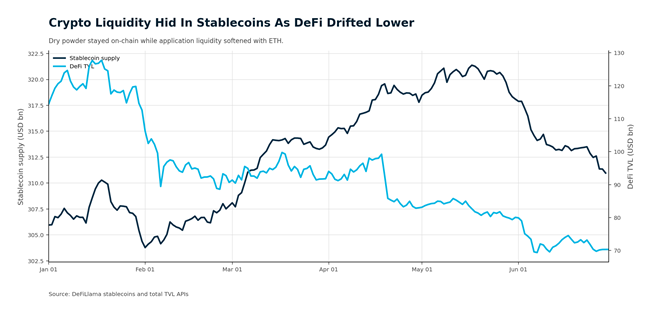
The quieter signal was what did not leave. DeFiLlama data cached for this report shows stablecoin supply slipping from roughly $318.1 billion to $311.0 billion in June, a 2.2% decline. Over the same month, DeFi TVL fell from roughly $80.1 billion to $70.3 billion, a 12.2% drop. That is not a market being abandoned. It is a market moving down the internal risk curve.
Source: DeFiLlama
Bitcoin usage also complicates the bearish read. Daily transactions climbed above 820,000 even as the token lost its floor. That tells the same story as the stablecoin and TVL data. The system kept working. Investors just wanted less exposure to the most volatile layer of it.
Regulatory Developments
Policy stayed more promising than complete. The CLARITY Act gained a July 17 hearing date, which at least turned a vague summer process into a visible next step. That still leaves the core issue unresolved: crypto did not get new market-structure certainty in June itself.
The more durable regulatory and institutional signal came from supervised infrastructure getting thicker. Chainlink’s bank settlement work, Coinbase’s push into broader financial products, and the continued growth of tokenized equities all point in the same direction. The market is rewarding crypto-adjacent structures that fit more comfortably inside ordinary finance. That trend kept advancing even while prices fell.
Wrap-up
June was not the month crypto’s infrastructure thesis broke. It was the month the market stopped paying up for native token beta without stronger sponsorship. Bitcoin lost the ETF cushion it had learned to rely on, and Ethereum lost price support while governance and funding questions moved into the foreground. That combination matters because it separates two ideas that often get blurred together: the usefulness of crypto rails and the willingness of investors to hold the major tokens that sit on top of them.
The market spent June drawing that line more clearly. Stablecoins stayed large. Bitcoin network activity rose. Tokenized equities kept gaining traction, and bank-linked settlement experiments kept moving forward. Those were not signs of a sector being abandoned. They were signs of activity shifting toward products that look operationally useful and easier to defend inside traditional finance. The part that failed was the sponsor bid for BTC and ETH at a time when macro conditions were still restrictive and ETF flows were running in reverse.
That is a harsher and more useful read than saying AI simply stole the bid. The AI trade mattered, but it was only one part of the pressure. The deeper story was that fresh crypto demand was thin, policy relief never arrived, and capital preferred structures that looked more familiar, lower-risk, or more directly tied to real financial use. June did not settle the long-term case for Bitcoin or Ethereum. It exposed exactly what both assets still need when markets get selective: durable inflows, cheaper financing, and a clearer reason for allocators to own the tokens rather than only the rails.
July now starts with a cleaner test. If ETF selling slows and macro data softens, the market has enough dry powder and enough underlying activity to recover faster than June’s price action implied. If the flow picture stays weak and policy remains tight, the same split can widen further: infrastructure keeps advancing while BTC and ETH remain under pressure. That is the real lesson from June. Adoption can continue without immediate token upside. When funding gets scarce, the market stops rewarding the story in general and starts rewarding only the parts that can already prove their utility.