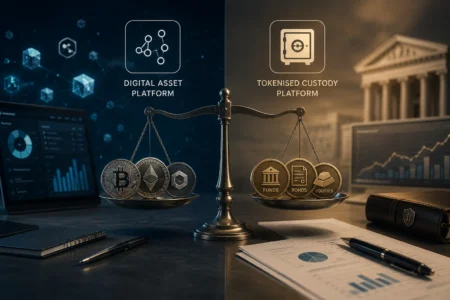
Each disposal of a crypto asset is a CGT event. That holds whether the client sells the asset for Australian dollars, swaps one token for another, or uses crypto to pay for something. The Digital Assets Framework does not change any of that. The CGT rules sit in the income tax law and the ATO’s published guidance, and they continue to apply in the same form before and after the Framework commences.[1][6] What the Framework does is sort platforms into categories, and the category a token sits inside can bear on what the underlying asset is, which can in turn affect how a particular holding is characterised. For accountants and tax advisers, the work is identifying every disposal, recording it at the time, and noticing the cases where the platform category changes the analysis.
Key takeaways on CGT events for digital assets
- Each disposal of a crypto asset is a CGT event. Disposal covers selling for AUD, exchanging one crypto for another, and using crypto to pay for goods or services.[1]
- A crypto-to-crypto swap is a disposal of the token given up, even though no Australian dollars change hands. The capital gain or loss is worked out in AUD at the time of the swap.[1]
- The Framework does not change the CGT treatment of digital assets; it regulates platforms and conduct under the Corporations Act. CGT stays governed by the income tax law and ATO guidance.[6]
- The 50% CGT discount itself is changing on a separate timetable. A 2026-27 Budget measure (before Parliament, not yet law) replaces it from 1 July 2027 for individuals, trusts, and partnerships with cost-base indexation plus a 30% minimum tax, applying to crypto; SMSFs and companies are excluded.[3]
- The platform category can bear on characterisation indirectly. A tokenised custody platform holds tokens that represent an underlying financial product, so the tax treatment may follow the underlying; a digital asset platform holds tokens that are not financial products, taxed on their own terms. This is an inference from the definitions, not a settled ATO ruling.[6]
- Contemporaneous records carry the file: date, AUD value at the time, the nature of the transaction, and the counterparty or wallet, kept for every transaction rather than reconstructed at year end.[5]
The ATO has treated crypto assets as CGT assets for some years, and the position is published rather than novel.[1] A disposal triggers a CGT event, and the gain or loss is the difference between the capital proceeds and the cost base, expressed in Australian dollars. None of that shifts when the Framework commences on 9 April 2027, having received Royal Assent on 8 April 2026.[6] The Framework regulates the platforms a client uses to hold and trade digital assets. It does not touch the income tax law that decides what a disposal costs the client. The two regimes run in parallel, and the point where they meet is narrow.
This article is written for accountants and tax advisers preparing returns for clients who hold crypto. It walks through what counts as a CGT event, why crypto-to-crypto swaps catch people out, where the 12-month discount sits, and the one place the Framework’s platform categories reach into the tax analysis. It does not cover GST, the investor-versus-business question, or staking and airdrop income, which sit in the companion piece. Crypto tax treatment beyond CGT For the SMSF-specific file, the valuation and record-keeping detail sits separately. the SMSF crypto ATO checklist
What counts as a CGT event for crypto?
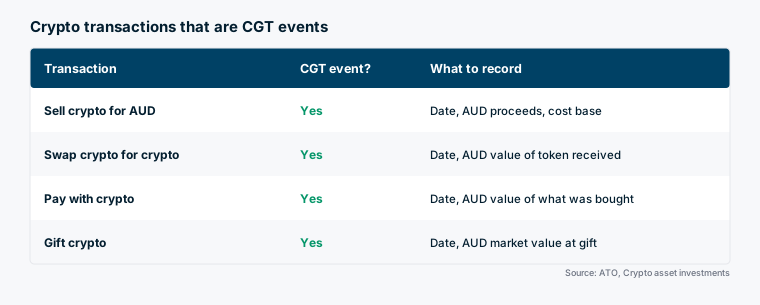
A crypto asset is a CGT asset, and a disposal of it is a CGT event.[1] The common disposals are selling the asset for Australian dollars, exchanging one crypto asset for another, and using crypto to pay for goods or services. Each of those is a disposal in the ATO’s view, and each triggers a capital gain or loss measured in AUD at the time of the transaction.[1]
The gain or loss is the capital proceeds less the cost base. For a sale into AUD, the proceeds are the dollars received. For a crypto-to-crypto swap or a payment in crypto, the proceeds are the AUD market value of what the client received at the moment of the transaction. The cost base is what the client paid to acquire the asset given up, including incidental costs, again in AUD. The practical difficulty with crypto is rarely the formula. It is reconstructing the AUD values at dozens or hundreds of points across a year.
The capital gains tax position does not depend on whether the client ever converts back to Australian dollars. A client who only ever moves between tokens, never touching AUD, still has a string of CGT events to account for. The absence of a bank transaction is not the absence of a disposal.
Is a crypto-to-crypto swap a disposal?
Yes. Swapping one crypto asset for another is a disposal of the token given up, and it triggers a CGT event, even though no Australian dollars are involved.[1] This is the point clients most often miss. The intuition that “I haven’t cashed out, so there’s nothing to report” does not match the law. The swap is a disposal of the first asset and an acquisition of the second, both valued in AUD at the time.
The capital proceeds on the disposal are the AUD market value of the crypto received in the swap. The cost base of the newly acquired asset is that same AUD value, which becomes the starting point for the next disposal. A client who trades actively between tokens generates a chain of disposals and acquisitions, each one a fresh CGT event with its own AUD value to capture. For an accountant working from a bare exchange export, the values are often there in the data, but matching each leg to a contemporaneous AUD figure is where the time goes.
The same logic applies to paying with crypto. Using a crypto asset to buy goods or services disposes of that asset at its AUD market value when the payment is made.[1] The transaction is a purchase from the client’s perspective and a disposal from the tax system’s perspective at the same moment.
Does the 12-month CGT discount apply to crypto?
A capital gain on a CGT asset held for more than 12 months may qualify for the CGT discount, for individuals and trusts, and the discount is not available to companies.[2] Crypto held as an investment is a CGT asset, so a gain on a token held more than 12 months before disposal can attract the discount on the same basis as any other CGT asset, subject to the usual conditions.
The holding period runs to each individual disposal, which is where crypto-to-crypto swaps interact with the discount. When a client swaps token A for token B and later disposes of token B, the clock for token B starts at the swap, not at the original purchase of token A. A long total time in “crypto” does not mean a long holding period for the specific asset disposed of. The discount is tested asset by asset, disposal by disposal.
For company clients, the discount is simply not available, so the full gain is brought to account.[2] The entity that holds the asset therefore changes the after-tax result on the same underlying transaction. The point to flag for clients is that the structure they hold crypto through, and the holding period of each specific asset, both feed the calculation before any discount is considered.
Is the CGT discount itself changing?
Yes, on a separate timetable from the Framework. The 2026-27 Federal Budget announced that the 50% CGT discount will be replaced from 1 July 2027, for individuals, trusts, and partnerships, with a discount based on inflation plus a minimum 30% tax on the gain.[3] Under the announced model the cost base is uplifted by CPI over the holding period, so only the real gain above inflation is taxed, and the effective rate on that real gain cannot fall below 30%. The new regime applies to most asset classes, including crypto held as an investment.[3]
This is income tax law, not the Digital Assets Framework, and it is not yet law. The measure was introduced to Parliament on 28 May 2026 and applies, as drafted, to gains arising after 1 July 2027, with proposed transitional rules for assets held across that date.[3] Until it passes, the current 50% discount continues. Superannuation funds, including SMSFs, and companies are excluded and keep their existing CGT settings, so the entity holding the crypto matters even more once the change takes effect.[3] For a client holding crypto personally and weighing a long-held position, the discount they are counting on today is the one most directly affected.
Does the personal use asset exemption apply to crypto?
The personal use asset exemption is narrow. It can apply where a client acquires crypto and uses it to buy personal items: a capital gain on a personal use asset is disregarded where the asset was acquired for $10,000 or less. That gain-disregard rule and the $10,000 threshold sit in section 118-10(3) of the Income Tax Assessment Act 1997; section 108-20, which defines a personal use asset, disregards capital losses on such assets rather than gains.[4] It generally does not apply to crypto held for investment. For the typical client holding crypto for its expected gain, the exemption is not the answer, and treating it as one is a common error.
The ATO’s framing turns on purpose and use. Crypto acquired and held to make a gain, or to use as an investment, is not a personal use asset, regardless of an occasional purchase made with it. The longer an asset is held and the more it is treated as a store of value, the less likely the exemption is to apply. For accountants, the safer default is to assume CGT applies in full and to test the personal use position only where the facts genuinely support it. [4]
Does the DAP/TCP distinction change CGT?
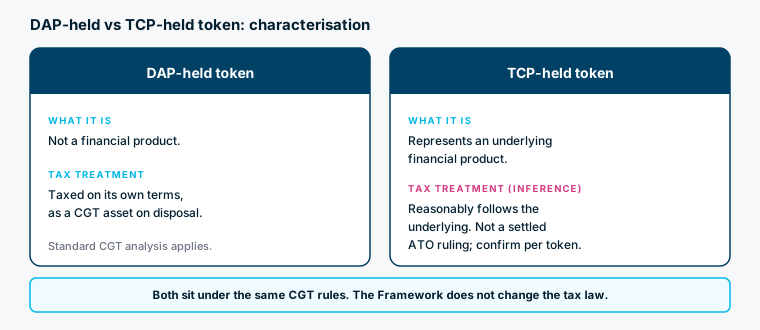
The Framework does not change the CGT rules, but the platform category can bear on what the underlying asset is, and that can shift characterisation. This is an inference from the definitions rather than a settled ATO ruling, and it should be treated as a question to resolve, not a conclusion to rely on.[6]
The Framework creates two regulated platform categories. A digital asset platform (DAP) provides services in relation to digital assets that are not themselves financial products. A tokenised custody platform (TCP) holds tokens that represent an underlying financial product.[6] The income tax law looks through to what the asset actually is. A token that represents an underlying financial product is, in substance, an interest in that product, and a reasonable reading is that its tax treatment would follow the underlying rather than being treated as a free-standing crypto asset. A token held on a DAP that is not a financial product is taxed on its own terms as a CGT asset on disposal.
The inference is straightforward and the practical caution is equal to it. Whether a tokenised instrument is taxed as the underlying or as a stand-alone CGT asset depends on the specific token, the rights it carries, and the ATO’s view of it, which is not settled for the new platform categories. The point to raise with a client is that the category the platform sits in is a signal about what they actually hold, and the characterisation question is worth asking before a disposal rather than after. The Framework gives advisers a cleaner way to ask it, because the platform’s category now turns on the financial-product status of the underlying.[6] For the platform-category mechanics themselves, the distinction is set out in more depth separately. platform versus custody
What records does a CGT file for crypto need?
The ATO expects a record for every transaction: the date, the AUD value at the time, the nature of the transaction, and the counterparty or wallet.[5] For a CGT file, that record set is what lets each gain or loss be calculated and supported. The date fixes the holding period and the discount test. The AUD value fixes the proceeds or the cost base. The nature of the transaction identifies whether it is an acquisition, a disposal, or a swap that is both. The counterparty or wallet links the record to the on-chain or platform movement.
Reconstruction is the recurring risk. A client who trades across a year and tries to rebuild the file at return time will struggle to match each movement to its AUD value at the moment it happened. The cleaner process captures each event as it occurs, so the year-end task is reconciliation rather than reconstruction. For accountants, the leverage is in the feed or the export discipline set up at the start of the year, not the spreadsheet built in October.
The platform a client uses shapes how clean the record is. Platforms operating under the Framework’s categories will be subject to asset-holding and transactional standards, which over time should improve the quality and consistency of the transaction data clients can produce. The tax obligation itself does not change with the platform, but the evidence available to support it can.[6] the Digital Assets Framework field guide
Common questions
Is every crypto sale a CGT event?
Yes. Disposing of a crypto asset is a CGT event, and selling it for Australian dollars is the clearest case.[1] The capital gain or loss is the AUD proceeds less the cost base. A capital loss can be used against capital gains under the usual rules.
Is swapping one crypto for another a CGT event?
Yes. A crypto-to-crypto swap is a disposal of the token given up and triggers a CGT event, even though no Australian dollars are involved.[1] The proceeds are the AUD market value of the crypto received at the time of the swap, and that same value becomes the cost base of the asset acquired.
Is paying for something with crypto a CGT event?
Yes. Using a crypto asset to pay for goods or services disposes of that asset and triggers a CGT event.[1] The capital proceeds are the AUD market value of what the client received at the time of the payment.
Can crypto qualify for the 12-month CGT discount?
A capital gain on a CGT asset held more than 12 months may qualify for the CGT discount for individuals and trusts; it is not available to companies.[2] The 12-month period runs to the specific disposal, so a token acquired in a swap starts a fresh holding period from the date of that swap, not from the original purchase of the asset given up.
Does the personal use asset exemption cover crypto held as an investment?
Generally no. The personal use asset exemption is narrow and turns on the asset being acquired and used for personal consumption, with a cost-base threshold.[4] Crypto held for investment generally falls outside it, so the safer default is to assume CGT applies in full and test the personal use position only where the facts support it.
Does the Digital Assets Framework change how crypto is taxed?
No. The Framework is a Corporations Act and ASIC regime that regulates platforms and conduct. It does not change the income-tax or CGT treatment of digital assets, which remain governed by the income tax law and ATO guidance.[6] It received Royal Assent on 8 April 2026 and commences on 9 April 2027, and neither date changes the CGT rules.
Could the DAP/TCP categories affect a client’s tax position?
Possibly, indirectly, and the point is unsettled. A TCP holds tokens representing an underlying financial product, so a reasonable inference is that the token’s tax treatment follows the underlying; a DAP-held token that is not a financial product is taxed on its own terms.[6] This is an inference from the platform definitions rather than a settled ATO ruling, so the characterisation of any specific tokenised instrument should be confirmed before a disposal.
What should a CGT file for a crypto client contain?
A record for every transaction: the date, the AUD value at the time, the nature of the transaction, and the counterparty or wallet.[5] Kept contemporaneously, that record set supports the cost base, the proceeds, the holding period, and the gain or loss on each disposal.
- ATO, “Crypto asset investments”: ATO guidance that crypto is a CGT asset, that disposal (including crypto-to-crypto swaps and paying with crypto) triggers a CGT event, and on record-keeping expectations.
- Income Tax Assessment Act 1997 (Cth), Div 115: the CGT discount for capital gains on assets held more than 12 months (individuals and trusts; not companies).
- Income Tax Assessment Act 1997 (Cth), s 118-10(3) and s 108-20: the personal use asset gain disregard ($10,000 threshold) and the definition of a personal use asset.
- ASIC, “ASIC’s roadmap for digital assets law reform implementation”, 20 April 2026: the Digital Assets Framework, its DAP and TCP categories, Royal Assent on 8 April 2026, and commencement on 9 April 2027.
- Australian Government, Budget 2026-27 tax reform and ATO, “Reforming negative gearing and capital gains tax”: the announced replacement of the 50% CGT discount from 1 July 2027 (before Parliament, not yet law).
Where to start
Alpha Node is the regulated digital asset infrastructure layer Australian advice and accounting practices partner with: execution, custody, wholesale funds management, wholesale advice, and commercial lending.[7] Practices engage the digital asset market without building the stack themselves.
If you prepare returns for clients with digital asset holdings and want a custody and reporting arrangement that produces a clean, contemporaneous CGT file, the appropriate next step is a conversation.
Sources
- ATO, “Crypto asset investments”. The ATO treats crypto assets as CGT assets; a disposal triggers a CGT event. Disposal includes selling crypto for Australian dollars, exchanging one crypto asset for another (crypto-to-crypto), and using crypto to pay for goods or services. Capital gains and losses are calculated in Australian dollars at the time of the transaction. https://www.ato.gov.au/individuals-and-families/investments-and-assets/crypto-asset-investments ↩
- Income Tax Assessment Act 1997 (Cth), Div 115; ATO guidance. A capital gain on a CGT asset held for more than 12 months may qualify for the CGT discount for individuals and trusts; the discount is not available to companies. https://www.legislation.gov.au/C2004A05138/latest/text ↩
- 2026-27 Federal Budget capital gains tax reform, introduced to Parliament on 28 May 2026 (Treasury Laws Amendment (Tax Reform No. 1) Bill 2026; Income Tax Rates Amendment (Tax Reform No. 1) Bill 2026); not yet law as at June 2026. From 1 July 2027 the 50% CGT discount is replaced for individuals, trusts, and partnerships with cost-base indexation (CPI uplift of the cost base) plus a minimum 30% tax on the real gain, applying to most asset classes including crypto; superannuation funds (including SMSFs), companies, and life insurance companies are excluded and retain existing CGT settings. Applies to gains arising after 1 July 2027, with proposed transitional rules. Australian Government, Budget 2026-27 (https://budget.gov.au/content/04-tax-reform.htm); ATO, “Reforming negative gearing and capital gains tax” (https://www.ato.gov.au/about-ato/new-legislation/in-detail/individuals/tax-reform-boosting-home-ownership-reforming-negative-gearing-and-capital-gains-tax); Westcourt (https://westcourt.com.au/news-article/how-capital-gains-tax-changes-from-1-july-2027-part-1-the-new-rules/). ↩
- ATO “personal use asset” guidance; Income Tax Assessment Act 1997 (Cth), s 118-10(3) (a capital gain on a personal use asset is disregarded where the asset was acquired for $10,000 or less) and s 108-20 (defines a personal use asset and disregards capital losses on such assets). The exemption is narrow and generally does not apply to crypto held for investment. https://www.ato.gov.au/individuals-and-families/investments-and-assets/crypto-asset-investments ↩
- ATO crypto record-keeping guidance. The ATO expects a record for every transaction, including the date, the value in Australian dollars at the time, the nature of the transaction, and the other party or wallet. https://www.ato.gov.au/individuals-and-families/investments-and-assets/crypto-asset-investments ↩
- The Digital Assets Framework (Corporations Amendment (Digital Assets Framework) Act 2026) is a Corporations Act / ASIC regulatory regime: it received Royal Assent on 8 April 2026 and commences on 9 April 2027, creating two regulated platform categories, digital asset platforms (DAPs, holding tokens that are not themselves financial products) and tokenised custody platforms (TCPs, holding tokens that represent underlying financial products). It regulates platforms and conduct, not individual tokens, and does not change the income-tax or CGT treatment of digital assets, which remain governed by the Income Tax Assessment Acts and ATO guidance. The proposition that a TCP-held token follows the underlying financial product’s tax treatment while a DAP-held non-financial-product token is taxed on its own terms is a reasonable inference from the platform definitions, not a settled ATO ruling, and should be confirmed for any specific instrument. Framework facts per ASIC, “ASIC’s roadmap for digital assets law reform implementation”, 20 April 2026. https://www.asic.gov.au/about-asic/news-centre/news-items/asic-s-roadmap-for-digital-assets-law-reform-implementation/ ↩
- Alpha Node Global, regulatory authorisations. Alpha Node X Pty Ltd (ACN 689 717 422; AUSTRAC VASP 100903039); Alpha Node Capital Pty Ltd (ACN 603 150 634; AFSL 479974, wholesale clients only; AUSTRAC VASP 100612840-001); Alpha Node Capital Management Pty Ltd (ACN 675 404 047; CAR 1308193 of Alpha Node Capital; AUSTRAC VASP 100895147-001); Alpha Node Advisors Pty Ltd (ACN 154 320 000; AFSL 416956, wholesale clients only; AUSTRAC VASP 100282425-001); Alpha Node Finance Pty Ltd (ACN 675 410 116; Credit Representative 556504 of Fair Loans Foundation Pty Ltd, ACL 378968). https://alphanode.global/regulatory/ ↩