The line between the two new Framework categories runs through one question: is the underlying asset a financial product? A digital asset platform (DAP) provides services in relation to digital assets that are not themselves financial products. A tokenised custody platform (TCP) holds tokens that represent underlying financial products.[1][2] Which side of that line a platform sits on decides which obligations attach to it under the Act and, indirectly, how the holding behind the token is characterised. For an adviser deciding how a client accesses digital assets, the category is the first thing worth knowing about any platform.
Key takeaways on digital asset platforms vs tokenised custody platforms
- A DAP provides services for digital assets that are not financial products. A TCP holds tokens that represent underlying financial products. The financial-product status of the underlying is what splits the two.[1][2]
- The Digital Assets Framework creates both categories. It regulates the platforms, not the individual tokens. Both categories require an AFSL from ASIC.[1][2]
- Each category carries asset-holding standards under s 912BE and transactional and settlement standards under s 912BF, with ASIC drawing on its custody guidance in RG 133.[2][5]
- The categories take effect at commencement on 9 April 2027. The 30 June 2026 AFS-licence application deadline comes first, and it is governed by the existing licensing regime rather than the new categories.[1]
- The Framework does not change the tax treatment of digital assets. A TCP-held token follows the underlying financial product it represents, while a DAP-held token that is not a financial product is treated on its own terms.[1]
The Digital Assets Framework received Royal Assent on 8 April 2026 and commences on 9 April 2027.[1] It creates two regulated platform categories: digital asset platforms and tokenised custody platforms.[1][2] Most of the public conversation has treated them as two flavours of the same thing. They are not interchangeable. The distinction is structural, and it determines the obligations a platform carries, the questions an adviser should ask before recommending access, and how the asset behind the token is treated.
This piece sets the two categories side by side and works through what separates them. It sits within the Digital Assets Framework pillar overview, which maps how the regime fits together. It is written for advisers weighing how a client accesses digital assets, and for the legal and referral partners who sit alongside that decision. It does not cover the full AFSL application mechanics, which sit in a separate piece, and it does not work through CGT characterisation in detail.
What is a digital asset platform (DAP)?
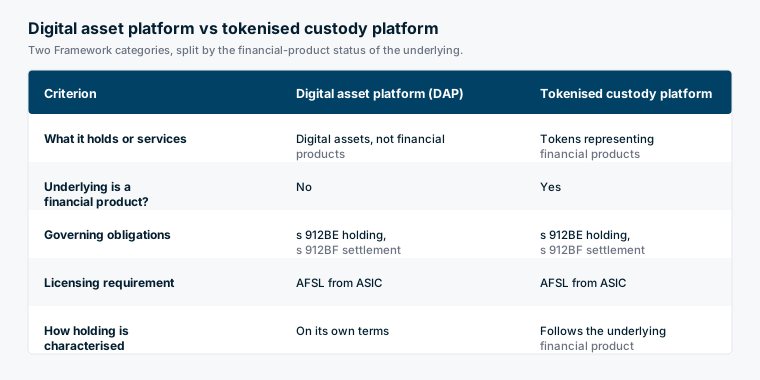
A digital asset platform provides services in relation to digital assets that are not themselves financial products.[1][2] The token a DAP deals with sits outside the existing meaning of a financial product under the Corporations Act. The platform is regulated for the services it provides around that token, not because the token itself is a regulated product.
The Framework regulates the platform, not the individual token.[1] A DAP that provides financial services in Australia must hold an AFSL from ASIC.[1][2] That requirement flows from the existing rule that a person carrying on a financial services business in Australia must hold a licence, or be authorised as a representative, unless an exemption applies.[3] The licence carries the general obligations every AFS licensee holds: to provide services efficiently, honestly and fairly, to manage conflicts, to maintain competence, and to keep adequate resources and risk management arrangements.[4]
On top of those general obligations, a DAP carries the Framework’s platform standards once the categories take effect at commencement on 9 April 2027: asset-holding standards under s 912BE and transactional and settlement standards under s 912BF.[2] ASIC draws on its existing custody guidance in RG 133 in administering the holding standard.[5] The asset behind a DAP-held token is not a financial product, so it is treated on its own terms rather than as a wrapper around something else.
What is a tokenised custody platform (TCP)?
A tokenised custody platform holds tokens that represent underlying financial products.[1][2] The token is a digital representation. Behind it sits an asset that already falls within the existing meaning of a financial product under the Corporations Act. The TCP’s role is to hold and administer those tokens, and the regulation follows from what the token stands for.
Like a DAP, a TCP must hold an AFSL from ASIC, and the Framework regulates the platform rather than the individual tokens.[1][2] The same general licensee obligations apply: efficient, honest and fair service, conflicts management, competence, adequate resources and risk management.[4] The platform standards apply here too once the categories commence on 9 April 2027, with asset-holding standards under s 912BE and transactional and settlement standards under s 912BF, and ASIC drawing on RG 133 for custody.[2][5]
The point that separates a TCP from a DAP is the underlying. Because a TCP holds tokens that represent financial products, the treatment of the holding follows the underlying financial product.[1] The token is a means of holding the product, not a thing standing on its own.
What actually separates a DAP from a TCP?
The dividing line is the financial-product status of the underlying asset.[1][2] A DAP services digital assets that are not financial products. A TCP holds tokens representing assets that are. Everything else, the licence, the general obligations, the platform standards, the custody guidance, runs in parallel across both categories.[1][2][5]
That single question carries weight beyond the label. It decides how the holding is characterised. A token a DAP services is treated on its own terms because there is no financial product behind it. A token a TCP holds is treated by reference to the financial product it represents, because that product is what the holder ultimately owns.[1] The category, in other words, is not a filing detail. It describes what the client actually holds.
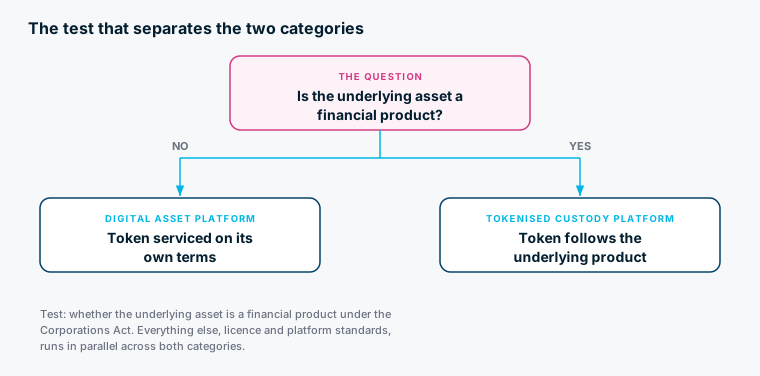
The Framework does not collapse the two into one regime with a shared rulebook for the underlying. It regulates both platforms to a common standard while keeping the assets behind them distinct.[1] An adviser who knows only that a platform is “regulated under the Framework” still does not know which of the two they are dealing with, or what the client holds through it.
What obligations attach to each category?
Both categories require an AFSL and carry the Framework’s platform standards, so the obligation set is largely shared.[1][2] Each platform holds an AFS licence from ASIC and the general licensee obligations that come with it: efficient, honest and fair service, conflicts management, competence, and adequate resources and risk management.[4]
On top of those, both are subject to the Framework’s two platform standards once the categories take effect. The asset-holding standard under s 912BE addresses how a platform holds what it holds. The transactional and settlement standard under s 912BF addresses how transactions are processed and settled.[2] ASIC administers both categories and draws on its existing custody guidance in RG 133 for the holding standard.[5] Both standards apply to a DAP and a TCP alike.
Where the obligations bite differently is on the underlying, not the platform rulebook. A TCP holds tokens representing financial products, so the financial-product regime continues to govern what sits behind the token. A DAP services tokens that are not financial products, so there is no underlying financial-product layer to carry through.[1] The platform obligations are common. What they sit on top of is not.
How does the category affect an adviser recommending access?
For an adviser, the category answers a prior question: what is the client actually getting. A DAP gives the client exposure to a digital asset that is not a financial product, serviced by a licensed platform. A TCP gives the client a token that represents an underlying financial product, held by a licensed platform.[1][2] The access route and the thing accessed are different in each case.
Knowing the category also tells an adviser which regime governs the holding behind the token, which feeds the suitability and characterisation work that follows. A TCP-held token follows the underlying financial product. A DAP-held token is treated on its own terms.[1] The adviser still applies the same professional duties when recommending access regardless of category; the category shapes the facts those duties are applied to, not the duties themselves.
The licensing position is part of the same due diligence. A platform providing financial services in Australia must hold an AFSL or be authorised as a representative, and from commencement it operates within the relevant Framework category.[3][1] An adviser confirming that a platform is licensed, and knowing whether it is a DAP or a TCP, is checking both that the access is regulated and what the client holds through it. The AFSL requirements for digital asset platforms set out that licensing position in full.
When do the DAP and TCP categories actually take effect?
The categories activate at commencement on 9 April 2027.[1] Before that, the first dated event is 30 June 2026, the deadline for affected providers to apply for the relevant AFS licence, and the date the INFO 225 class no-action position expires.[1] The 30 June deadline runs under the existing licensing regime, not the new categories. The DAP and TCP authorisations come later.
ASIC’s 18-month implementation roadmap, published on 20 April 2026, structures the period in three phases. Phase 1 (April to October 2026) is consultation and licensing applications. Phase 2 (October 2026 to April 2027) produces the draft Regulatory Guide for DAPs and TCPs. Phase 3 (April to October 2027) is when DAP and TCP authorisation applications are lodged under regulatory relief.[1] The categories themselves switch on at commencement inside that third phase.
The sequence matters for reading a platform’s position today. A platform that says it is “preparing for the Framework” in mid-2026 is, in practice, inside the existing AFS licensing process. The DAP or TCP authorisation it will eventually carry does not exist as an authorisation until the categories commence on 9 April 2027. The 30 June 2026 deadline sits inside that existing process.
Does the Framework change how the asset is taxed?
The Framework does not change the tax treatment of digital assets.[1] It is a Corporations Act and ASIC regulatory regime that governs platforms and their conduct. The income-tax and CGT treatment of the asset behind a token is unaffected by which platform category holds or services it.
The category can bear on characterisation indirectly, through the underlying. A TCP holds tokens that represent financial products, so the treatment of the holding follows the underlying product. A DAP-held token that is not a financial product is treated on its own terms.[1] The platform category does not rewrite the tax rules; it describes the underlying, and the underlying drives the treatment. The detailed CGT mechanics sit in a separate piece.
Common questions
What is the difference between a digital asset platform and a tokenised custody platform?
A digital asset platform (DAP) provides services in relation to digital assets that are not themselves financial products. A tokenised custody platform (TCP) holds tokens that represent underlying financial products.[1][2] The financial-product status of the underlying asset is what separates the two categories.
Do both DAPs and TCPs need an AFSL?
Yes. Both categories require an Australian Financial Services Licence from ASIC.[1][2] The requirement flows from the existing rule that a person carrying on a financial services business in Australia must hold a licence, or be authorised as a representative, unless an exemption applies.[3]
Does the Framework regulate the tokens themselves?
No. The Framework regulates the platforms, not the individual tokens.[1] It creates the DAP and TCP categories and applies obligations to the platforms that operate within them, while the classification of a particular token as a financial product (or not) continues to determine which category applies.
What obligations do DAPs and TCPs carry under the Framework?
Both carry asset-holding standards under s 912BE and transactional and settlement standards under s 912BF, on top of the general AFS licensee obligations.[2][4] ASIC draws on its existing custody guidance in RG 133 in administering the holding standard.[5]
When do the DAP and TCP categories take effect?
The categories take effect at commencement on 9 April 2027.[1] The 30 June 2026 AFS-licence application deadline comes first and is governed by the existing licensing regime. DAP and TCP authorisation applications are lodged in Phase 3 of ASIC’s roadmap, from commencement onward, under regulatory relief.[1]
Does the platform category affect how my client’s holding is taxed?
The Framework does not change the tax treatment of digital assets.[1] The category can affect characterisation indirectly through the underlying: a TCP-held token follows the underlying financial product it represents, while a DAP-held token that is not a financial product is treated on its own terms.[1] The detailed CGT treatment is covered separately.
How should an adviser tell which category a platform falls into?
The test is whether the underlying asset is a financial product under the Corporations Act. If it is not, the platform servicing it is a DAP. If it is, the platform holding tokens that represent it is a TCP.[1][2] Confirming the platform’s licence position and its category is part of the due diligence on any access route an adviser considers, as the AFSL requirements for digital asset platforms set out.
- ASIC, “ASIC’s roadmap for digital assets law reform implementation”, 20 April 2026: Framework commencement timing, the DAP and TCP categories, the platform-not-token regulatory model, and the implementation phases.
- Corporations Amendment (Digital Assets Framework) Act 2026 (Cth): the legislation creating the digital asset platform and tokenised custody platform categories and the s 912BE and s 912BF platform standards.
- Corporations Act 2001 (Cth) s 911A: the requirement to hold an AFS licence to carry on a financial services business.
- Corporations Act 2001 (Cth) s 912A: the general obligations of AFS licensees.
- ASIC Regulatory Guide 133 (custody): ASIC’s custody guidance, drawn on in administering the asset-holding standard.
Where to start
Alpha Node is the regulated digital asset infrastructure layer Australian advice practices partner with: execution, custody, wholesale funds management, wholesale advice, and commercial lending.[6] It is not itself a Framework-authorised digital asset platform or tokenised custody platform; those authorisations do not exist until commencement on 9 April 2027. Practices engage the digital asset market without building the stack themselves.
If you are an adviser or a legal or referral partner working out how a client should access digital assets, and which platform category fits, the appropriate next step is a conversation.
Explore the Dealer Group pathway →
Sources
- ASIC, “ASIC’s roadmap for digital assets law reform implementation”, 20 April 2026. The Digital Assets Framework received Royal Assent on 8 April 2026 and commences on 9 April 2027. It creates two regulated platform categories: digital asset platforms (DAPs), which provide services in relation to digital assets that are not themselves financial products, and tokenised custody platforms (TCPs), which hold tokens that represent underlying financial products. The Framework regulates platforms, not individual tokens; both categories require an AFSL. The 18-month implementation roadmap runs in three phases: Phase 1 (Apr–Oct 2026) consultation and licensing applications, including the 30 June 2026 AFS-licence application deadline when the INFO 225 class no-action position expires; Phase 2 (Oct 2026–Apr 2027) the draft Regulatory Guide for DAPs and TCPs; Phase 3 (Apr–Oct 2027) DAP and TCP authorisation applications under regulatory relief. https://www.asic.gov.au/about-asic/news-centre/news-items/asic-s-roadmap-for-digital-assets-law-reform-implementation/ ↩
- Corporations Amendment (Digital Assets Framework) Act 2026 (Cth). Creates the digital asset platform and tokenised custody platform categories and the associated platform standards: asset-holding standards (s 912BE) and transactional and settlement standards (s 912BF). Both categories require an AFSL from ASIC. ↩
- Corporations Act 2001 (Cth) s 911A. A person who carries on a financial services business in Australia must hold an Australian Financial Services Licence, or be authorised as a representative of a licensee, unless an exemption applies. https://www.legislation.gov.au/C2004A00818/latest/text ↩
- Corporations Act 2001 (Cth) s 912A. General obligations of AFS licensees, including to do all things necessary to ensure financial services are provided efficiently, honestly and fairly; to manage conflicts of interest; to maintain organisational competence; and to have adequate resources and risk management systems. https://www.legislation.gov.au/C2004A00818/latest/text ↩
- ASIC Regulatory Guide 133, “Funds management and custodial services: Holding assets”. ASIC draws on its existing custody guidance in administering the asset-holding standard for DAPs and TCPs. https://www.asic.gov.au/regulatory-resources/find-a-document/regulatory-guides/rg-133-funds-management-and-custodial-services-holding-assets/ ↩
- Alpha Node Global, regulatory authorisations. Alpha Node X Pty Ltd (ACN 689 717 422; AUSTRAC VASP 100903039); Alpha Node Capital Pty Ltd (ACN 603 150 634; AFSL 479974, wholesale clients only; AUSTRAC VASP 100612840-001); Alpha Node Capital Management Pty Ltd (ACN 675 404 047; CAR 1308193 of Alpha Node Capital; AUSTRAC VASP 100895147-001); Alpha Node Advisors Pty Ltd (ACN 154 320 000; AFSL 416956, wholesale clients only; AUSTRAC VASP 100282425-001); Alpha Node Finance Pty Ltd (ACN 675 410 116; Credit Representative 556504 of Fair Loans Foundation Pty Ltd, ACL 378968). https://alphanode.global/regulatory/ ↩